Jet Dyeing Machine Variables That Affect Cotton Bioscouring
Cotton bioscouring is not controlled by enzyme selection alone. In a cotton knit dyehouse, the jet dyeing machine decides how evenly the bath reaches the fabric, how consistently waxes and pectins are removed, and whether the next dyeing stage starts with predictable absorbency.
For technical managers comparing an enzyme supplier for cotton bioscouring, the practical question is not only whether the chemistry works. It is whether the enzyme package can hold up under real jet-machine conditions: rope movement, liquor exchange, loading discipline, temperature ramping, pH control, seam-to-seam variability, and the rinse sequence that follows.
This guide focuses on the machine variables that most often separate a clean bioscouring result from marginal wetting, patchy dye uptake, or rework.
Why jet dyeing conditions matter in bioscouring
In a jet machine, cotton knit fabric moves as a rope through circulating liquor. That movement creates opportunity and risk at the same time.
A well-balanced bath gives the enzyme consistent access to the cotton surface. A poorly controlled bath can leave wax-rich zones, compacted rope sections, trapped air, or uneven exposure time. The fabric may look acceptable after scouring, but absorbency tests, shade build, and leveling behavior can reveal the problem later.
Bioscouring performance is strongest when the machine supports three operating goals:
- Uniform liquor contact across the full rope length
- Stable bath conditions during the active treatment window
- Efficient removal of loosened impurities before dyeing
When these are aligned, the dyehouse gains more dependable wetting, improved shade consistency, and fewer correction cycles.
1. Fabric loading and rope circulation
Overloading is one of the fastest ways to make bioscouring uneven. Cotton knit needs enough bath movement for the enzyme solution to penetrate folds, seams, and rope contact zones.
If the rope circulates too slowly, or if fabric compaction limits liquor exchange, the bath may not reach all areas with the same intensity. This can show up as:
- Slower or uneven droplet absorption
- Side-to-center wetting differences
- Shade variation after dyeing
- Longer rinse demand
- More frequent reprocessing decisions
A commercially practical bioscouring recipe should define a loading window that matches the dyehouse machine fleet, fabric construction, and target handfeel. LoopBath supports process alignment around the real operating range of the jet machine, not a lab-only condition.
2. Liquor ratio and bath exchange
Lower liquor operation can reduce water demand, but it also narrows the margin for error. With less water in the system, bath circulation and fabric movement become more critical.
In bioscouring, liquor ratio affects:
- How quickly the enzyme solution reaches fresh cotton surface
- How evenly loosened waxes and pectins are dispersed
- How stable pH and temperature remain through the load
- How effectively the bath prepares the fabric for the next wet process
The objective is not simply to run the lowest possible bath. The objective is to run a controlled bath that delivers consistent absorbency without adding rework risk.
3. Nozzle pressure and rope speed
Jet nozzle settings influence fabric transport, mechanical action, and surface exposure. Too little movement can leave contact marks or under-treated zones. Too much aggression can raise concerns around fabric distortion, hairiness, or excessive creasing depending on construction.
For cotton knits, the bioscouring window should be matched to:
- Fabric weight and openness
- Elastane presence or sensitivity
- Rope length and cycle time
- Machine geometry
- Final shade depth and quality tolerance
A stable rope path is especially important for pale shades, reactive dyeing, and programs where absorbency variation becomes visible quickly.
4. Temperature ramping and hold control
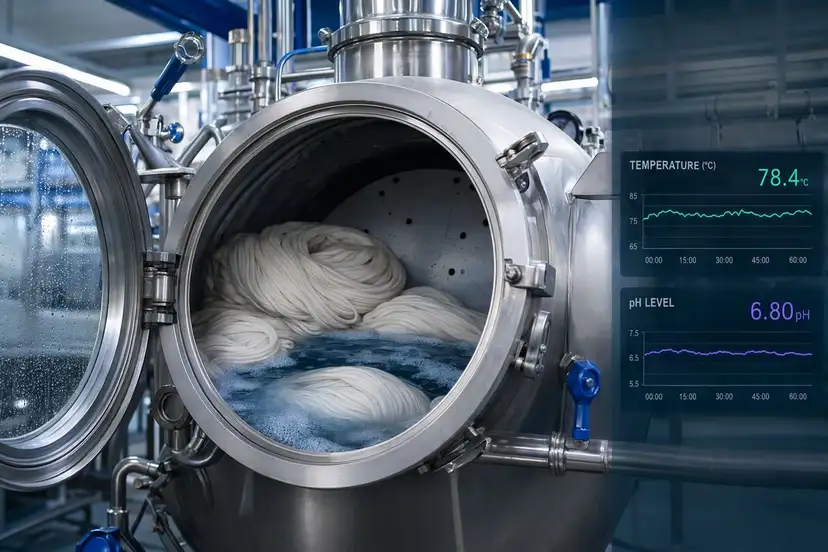
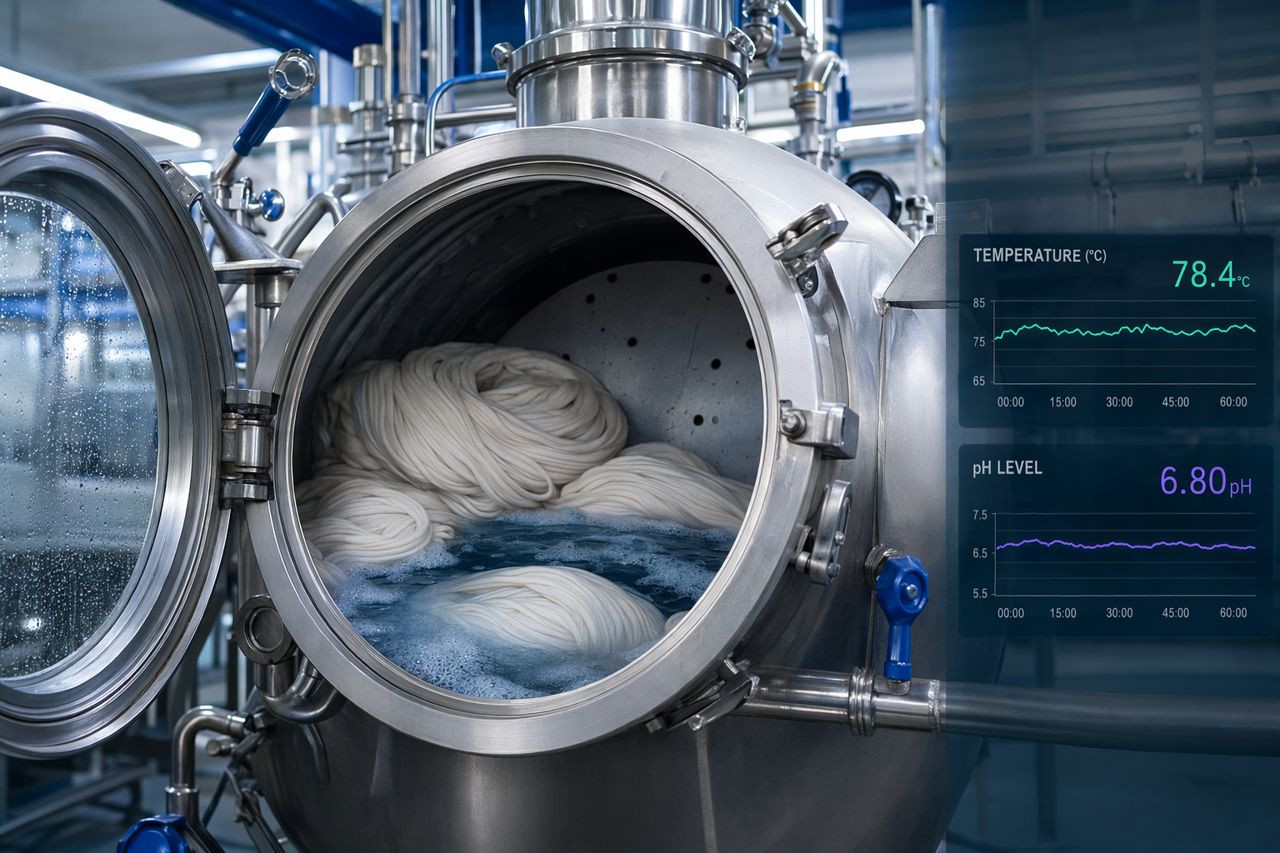
Enzymes need a controlled thermal environment to work predictably. In the jet machine, the issue is not only target temperature; it is how the bath gets there and how tightly it holds during the active stage.
Rapid ramps, overshoot, or uneven heat distribution can reduce process confidence. Slow or unstable ramping can extend cycle time and create inconsistent exposure across the batch.
A dyehouse-ready bioscouring approach should specify a practical temperature profile that works with production heating rates, not just an idealized setpoint. The best outcome is a repeatable treatment window that operators can run shift after shift.
5. pH stability and chemical compatibility
Cotton bioscouring depends on a bath environment that supports the enzyme while staying compatible with upstream and downstream chemistry. pH drift can come from residual alkali, water quality, fabric carry-in, auxiliaries, or dosing sequence.
Important compatibility checks include:
- Wetting agents and low-foam requirements
- Sequestering or dispersing systems
- Residual peroxide or preparation chemistry
- Salt or dyeing auxiliaries in combined or shortened processes
- Neutralization sequence before enzyme addition
For a cotton knit dyehouse, pH control is a production variable, not a laboratory detail. It protects absorbency performance and reduces the chance of shade movement later.
6. Defoaming and foam discipline
Jet dyeing machines depend on smooth liquor circulation. Foam interferes with pump efficiency, fabric transport, level sensing, and bath contact. In bioscouring, excessive foam can create inconsistent mechanical action and complicate rinsing.
Low-foam enzyme systems are preferred where machine speed, nozzle flow, and production reliability matter. The formulation should help the bath stay clean and controlled without creating new compatibility issues.
7. Dwell time and true exposure
Recipe time is not always the same as effective exposure time. If a fabric rope cycles unevenly or if the bath takes too long to stabilize, parts of the load may receive different treatment intensity.
Technical teams should evaluate bioscouring by the outcome that matters on the dye floor:
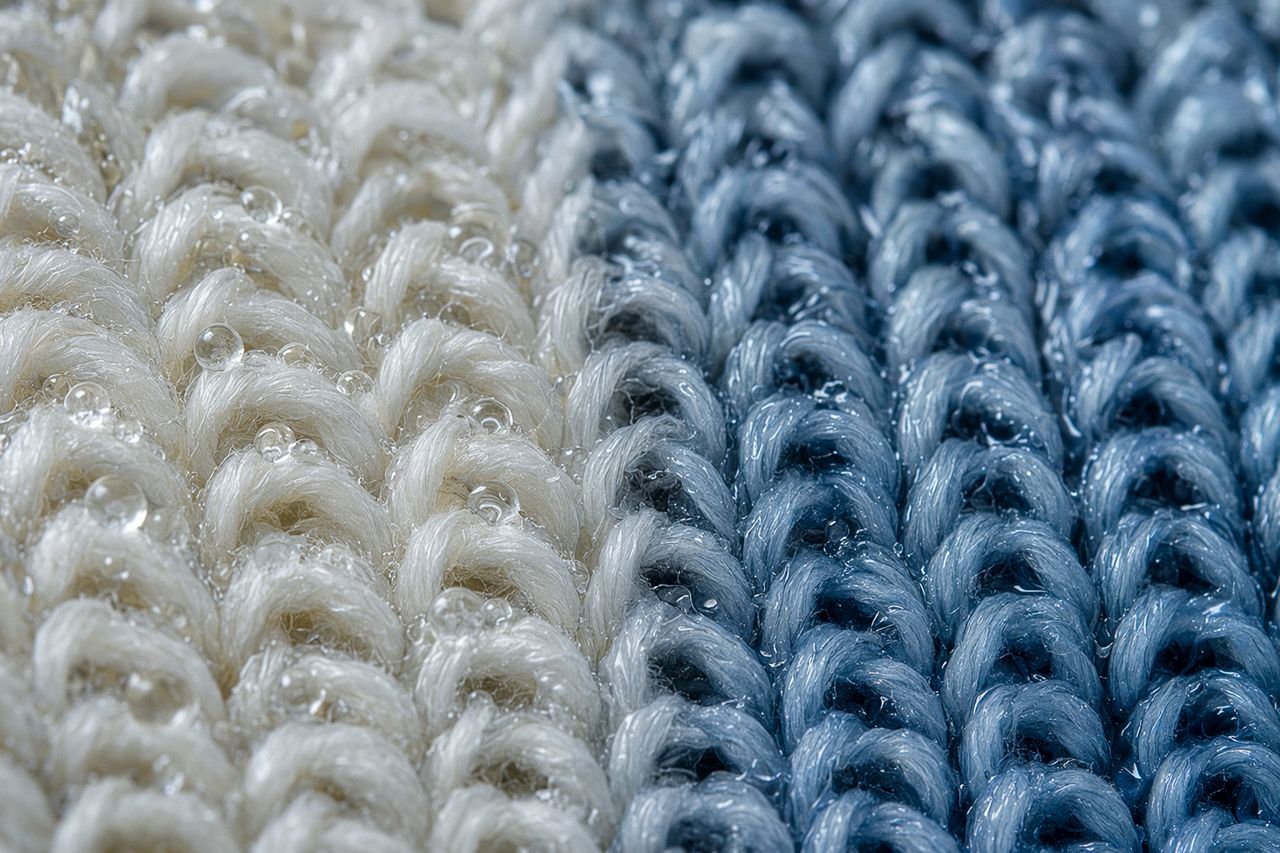
- Drop absorbency speed and uniformity
- Consistency after extraction or hydro
- Dye uptake behavior
- First-time-right shade rate
- Rinse clarity and cycle practicality
The right enzyme supplier for cotton bioscouring should be able to discuss these production measures clearly and help translate them into operating guidance.
8. Rinsing after bioscouring
Bioscouring loosens and removes hydrophobic surface impurities. The rinse stage determines whether those impurities leave the system cleanly or remain available to redeposit.
Good rinse design supports:
- Cleaner fabric surface before dyeing
- Lower risk of shade dullness
- More stable absorbency from batch to batch
- Reduced corrective washing
- Better preparation for reactive dye recipes
A short rinse may look attractive on paper, but it must be judged against downstream dyeing performance. The most efficient route is the one that avoids rework.
Practical checks before scaling a bioscouring recipe
Before moving from trial to regular production, confirm the process against plant-floor variables:
- Run the same fabric construction at normal production loading. Avoid validating only on light or forgiving styles.
- Record pH and temperature behavior across the actual cycle. Look for overshoot, drift, and operator adjustments.
- Check absorbency across the rope. Test beginning, middle, end, inner folds, and seam-heavy areas.
- Compare dyeing results, not only scouring appearance. Shade consistency is the commercial proof point.
- Review rinse demand and total cycle time. A bioscouring process must fit the dyehouse schedule.
- Watch foam and circulation behavior. Stable movement is part of recipe performance.
What to expect from LoopBath support
LoopBath works with cotton knit dyehouses that need bioscouring to be repeatable in production, not just promising in trial beakers. We help technical teams connect enzyme selection with jet-machine behavior, recipe compatibility, absorbency targets, and dyeing outcomes.
Our focus is practical:
- Process windows that fit jet dyeing machine constraints
- Recipe guidance for cotton knit preparation
- Compatibility review with existing auxiliaries
- Support for absorbency and shade-readiness evaluation
- Troubleshooting for uneven wetting, foam, or rework patterns
If your team is reviewing an enzyme supplier for cotton bioscouring or preparing to standardize a lower-impact scouring route, LoopBath can help define a controlled production path.
Request a quote
Share your fabric type, machine profile, current preparation route, and target dyeing outcome. LoopBath will review the fit and respond with a practical supply and process recommendation.
Request a quote