Fabric Hand After Enzymatic Pretreatment | LoopBath
How enzymatic pretreatment choices influence cotton knit hand, surface cleanliness, wetting, shade consistency, and rework risk in dyehouse production.
Request pricing How enzymatic pretreatment choices influence cotton knit hand, surface cleanliness, wetting, shade consistency, and rework risk in dyehouse production.
Request pricingIn a cotton knit dyehouse, fabric hand is not decided only by the softener at the end of the route. It is shaped early, during pretreatment, when the fabric surface is opened, waxes are removed, seed coat fragments are loosened, and the knit structure begins to take liquor evenly.
For technical managers comparing an enzyme supplier for cotton bioscouring, the practical question is not whether the chemistry sounds gentle. The question is whether the pretreatment route gives consistent wetting, stable shade build, lower rework risk, and a hand feel that does not need to be corrected later with excessive finishing chemistry.
LoopBath supports cotton knit processors with enzyme-based pretreatment solutions built around production realities: variable greige quality, mixed machine loading, shade sensitivity, recipe constraints, and the need to keep dyeing schedules moving.
Cotton knit fabric arrives with a natural surface load: waxes, pectins, fines, residual field matter, immature fiber fragments, and knitting oils. If these are not controlled before dyeing, the fabric may still dye, but the result can be operationally fragile.
Common symptoms include:
Enzymatic pretreatment helps target the surface barriers that interfere with wetting and dye accessibility. Instead of relying only on aggressive scouring conditions, the route can be tuned for controlled fiber-surface cleaning while preserving the natural knit feel.
A well-designed bioscouring step can improve the way cotton knit fabric behaves throughout the dyehouse route.
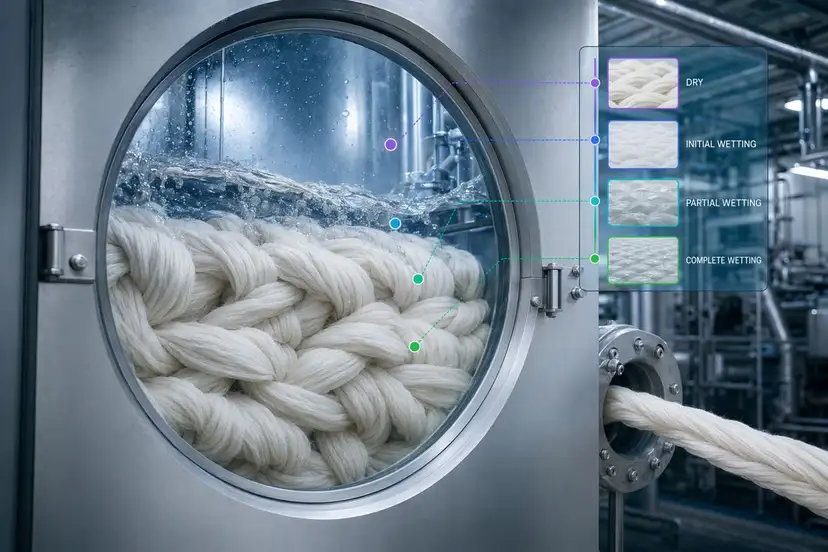
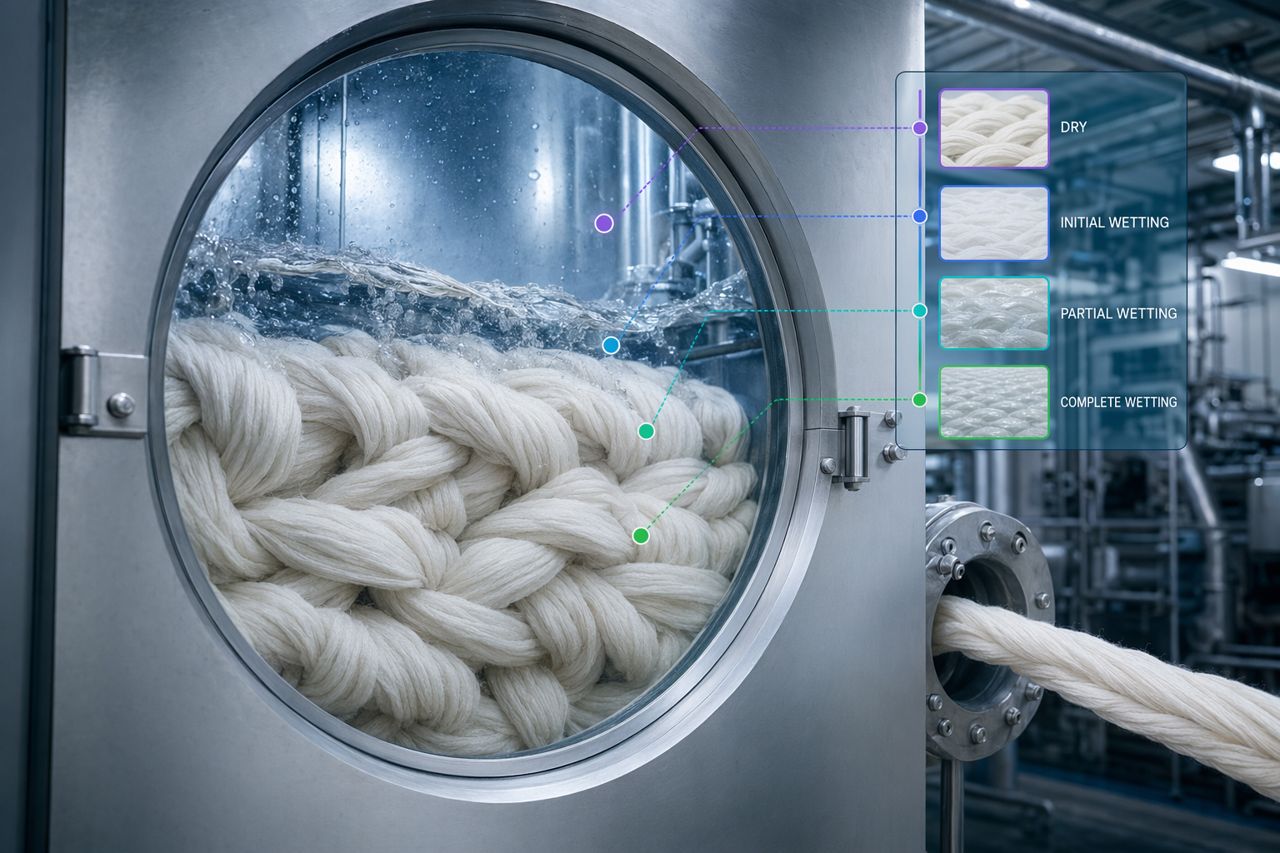
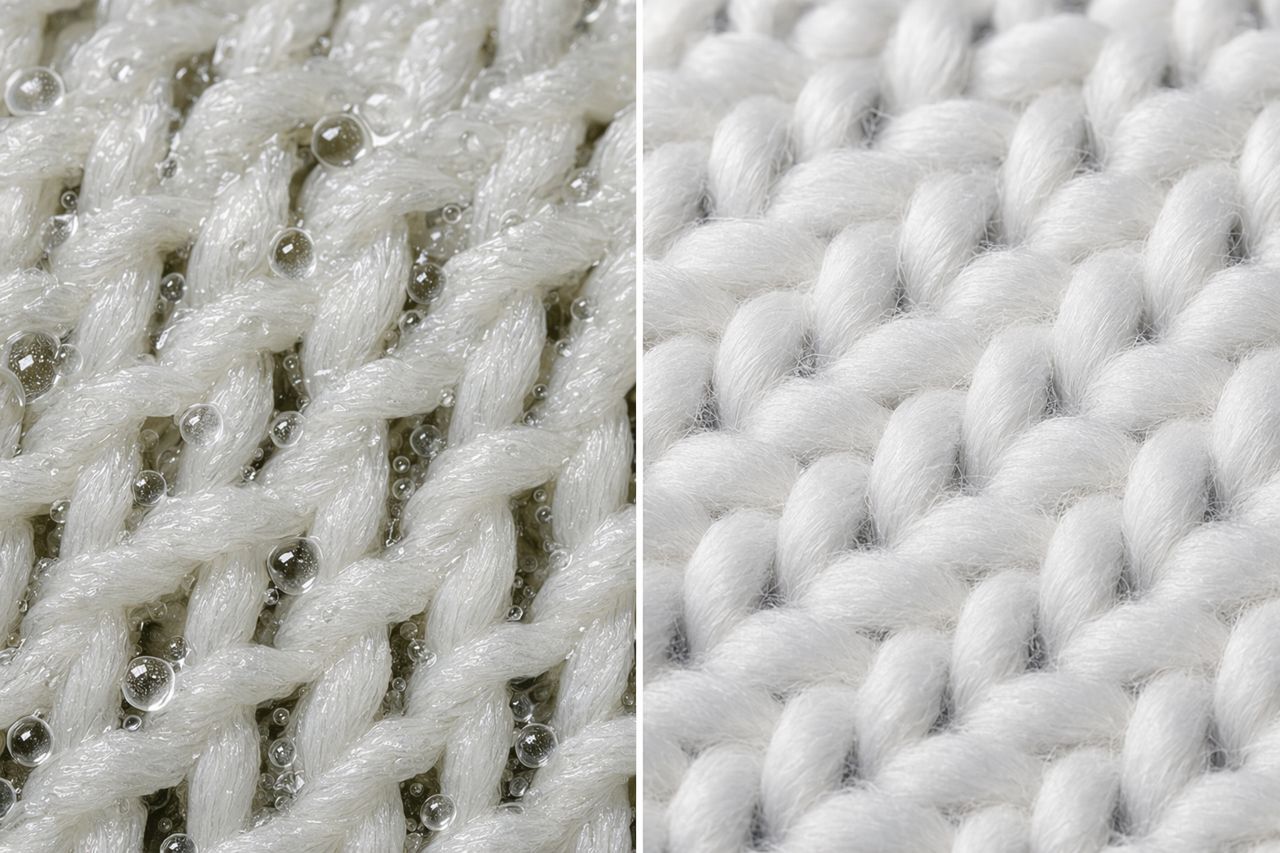
Even wetting is one of the most visible production benefits. When the fabric rope takes liquor more consistently, preparation becomes less dependent on extended circulation and operator intervention. Better absorbency supports more predictable dye pickup, especially on medium and deep shades where uneven preparation can become visible later.
Cotton knits are sensitive to rope abrasion, crease marking, and surface fuzz. Enzymatic pretreatment can support surface cleanliness without pushing the fabric through unnecessarily harsh conditions. This is especially valuable for single jersey, rib, interlock, and elastane blends where hand and surface appearance are commercially important.
A cleaner, more evenly wetted cotton surface often feels more natural before finishing. That gives the finisher more control. Instead of using softener to compensate for harsh preparation, the mill can apply finishing chemistry for the target handle: dry, smooth, lofty, compact, or fluid.
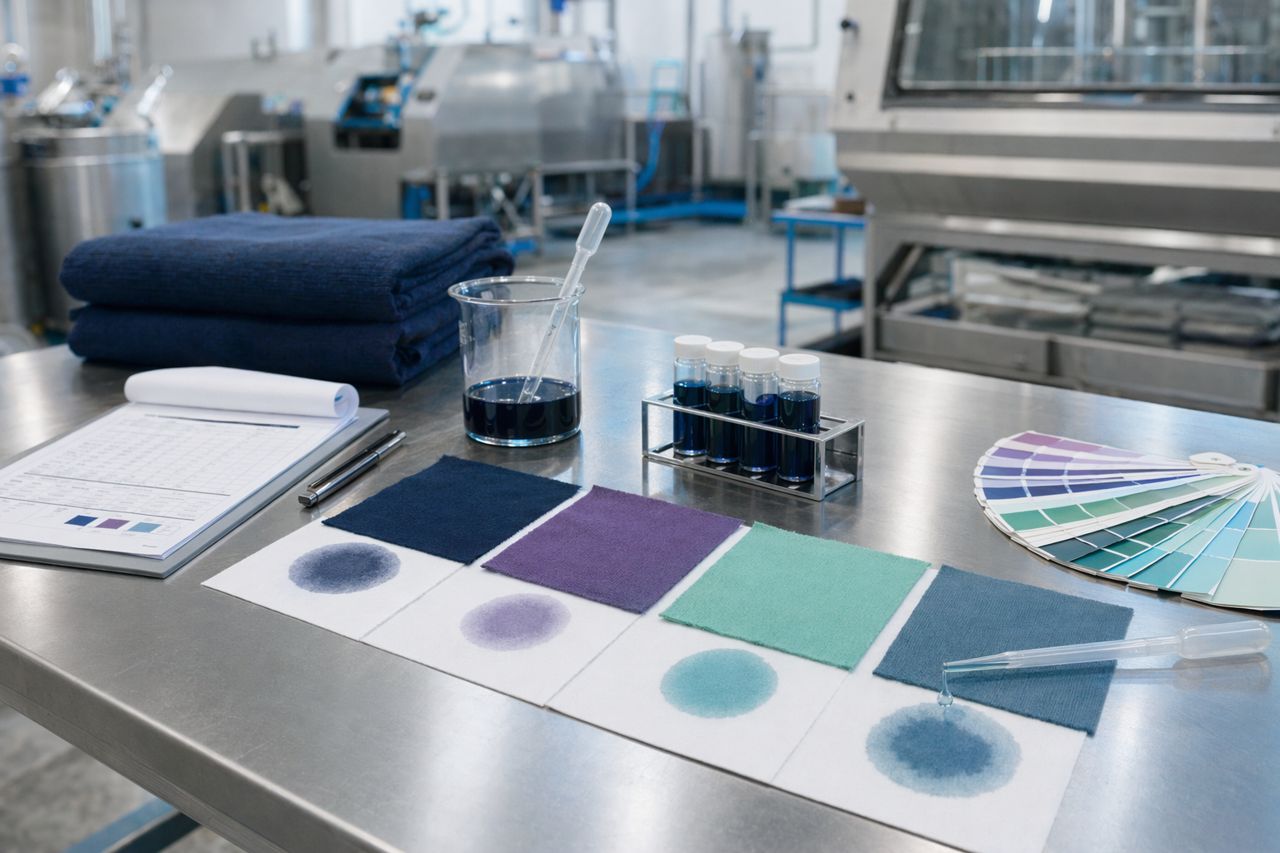
Pretreatment inconsistency is a hidden cause of shade variation. When wax removal and wetting differ from batch to batch, the dyeing stage has to absorb that variation. Enzymatic pretreatment helps create a more repeatable starting point, supporting first-time-right production and reducing the number of lots held for correction.
There is no single universal recipe for every cotton knit program. Selection depends on fabric construction, greige condition, shade range, equipment, water quality, and the mill’s existing pretreatment and dyeing sequence.
LoopBath evaluates the application around four plant-floor questions:
What absorbency level is required before dyeing?
Pale shades, high-brightness programs, and reactive dyeing routes may have different preparation expectations than dark fashion colors.
How sensitive is the fabric hand?
Lightweight jersey, rib, modal/cotton blends, and elastane-containing knits may require a lower-stress pretreatment profile.
Where does the dyehouse lose consistency today?
Rewetting delays, batch-to-batch shade drift, cloudy liquor, uneven wet-out, or excessive finishing correction each point to different pretreatment adjustments.
What must remain compatible with the current recipe?
A useful enzyme solution should fit into the mill’s real process window, not demand a completely new production logic unless the commercial case is clear.
Buyers may describe hand subjectively, but mills manage it through process control. A fabric that feels smooth, clean, and balanced after pretreatment gives the dyehouse more room to hit the required finish without overworking the material.
For export programs, repeatability matters as much as softness. A sample lot with excellent hand is not enough if bulk production shifts from clean and fluid to dry and inconsistent. Enzymatic pretreatment choices should therefore be judged across multiple batches, not only by one laboratory trial.
Recommended evaluation points include:
The strongest value case usually appears where preparation issues are already costing time or confidence. Enzymatic bioscouring can help reduce uncertainty in several common production situations:
The goal is not simply to replace one chemical with another. The goal is to create a cleaner, more predictable cotton surface so the rest of the dyehouse route performs with less friction.
LoopBath works with dyehouse teams to connect enzyme selection with measurable production outcomes. Support can include route review, trial planning, compatibility checks, fabric-specific recommendations, and scale-up guidance for jet, overflow, and soft-flow processing.
Our focus is practical: help the mill improve absorbency, protect hand, maintain shade consistency, and reduce unnecessary correction. If a current recipe is already close, we look for the smallest useful change. If rework is frequent, we help identify where pretreatment control is breaking down.
If you are reviewing an enzyme supplier for cotton bioscouring or comparing pretreatment options for cotton knit production, LoopBath can help map a route around your fabric, equipment, and shade program.
Use the on-site request a quote form and share your fabric construction, machine type, current pretreatment route, and the issue you want to improve. We will respond with a practical recommendation for your dyehouse conditions.
Tell us your application and volume — we reply with pricing and lead time.