Absorbency Checks Before Reactive Dyeing | Cotton Bioscouring
Practical absorbency checks cotton knit dyehouses should confirm before reactive dyeing, and how LoopBath supports enzyme supplier for cotton bioscouring evaluations.
Request pricing Practical absorbency checks cotton knit dyehouses should confirm before reactive dyeing, and how LoopBath supports enzyme supplier for cotton bioscouring evaluations.
Request pricingReactive dyeing does not forgive uneven preparation. If cotton knit enters the dyebath with waxy, hydrophobic areas still present, the first sign may be slow wet-out, rope-to-rope variation, shade drift, or extra correction time after dyeing.
Bioscouring should prove one practical point before salt and alkali are added: the fabric is ready to absorb liquor evenly across the batch, without harsh preparation that risks hand feel, strength, or loop definition.
For a cotton knit dyehouse, the absorbency check is not a paperwork exercise. It is a release decision.
Reactive dyeing depends on controlled liquor access to the fiber surface. When preparation is incomplete, the dyehouse may see:
Good bioscouring supports a cleaner transition from preparation to dyeing. The fabric should wet predictably, circulate without excessive foam disturbance, and accept the reactive recipe with fewer surprises.
The first question is simple: does the fabric take in liquor across the roll, or only in selected areas? Technical teams should compare wet-out behavior from different fabric positions, especially where rope compaction, contamination, or storage effects may influence preparation.
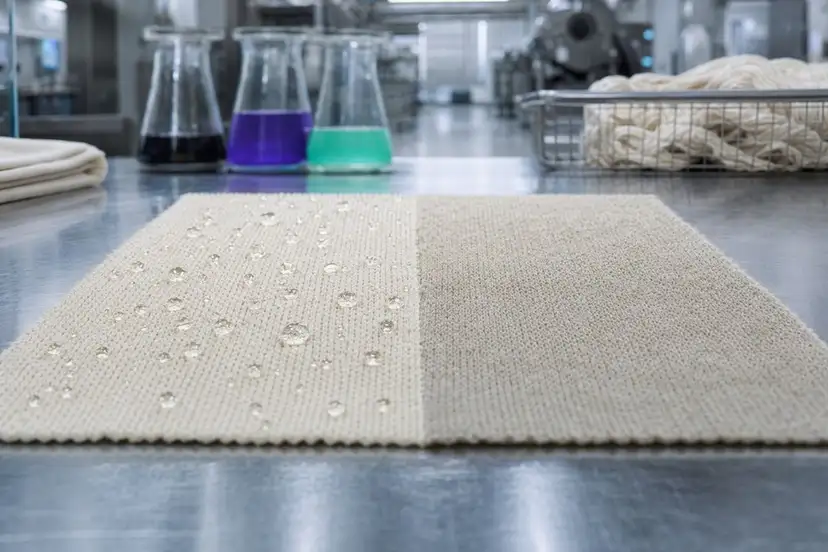
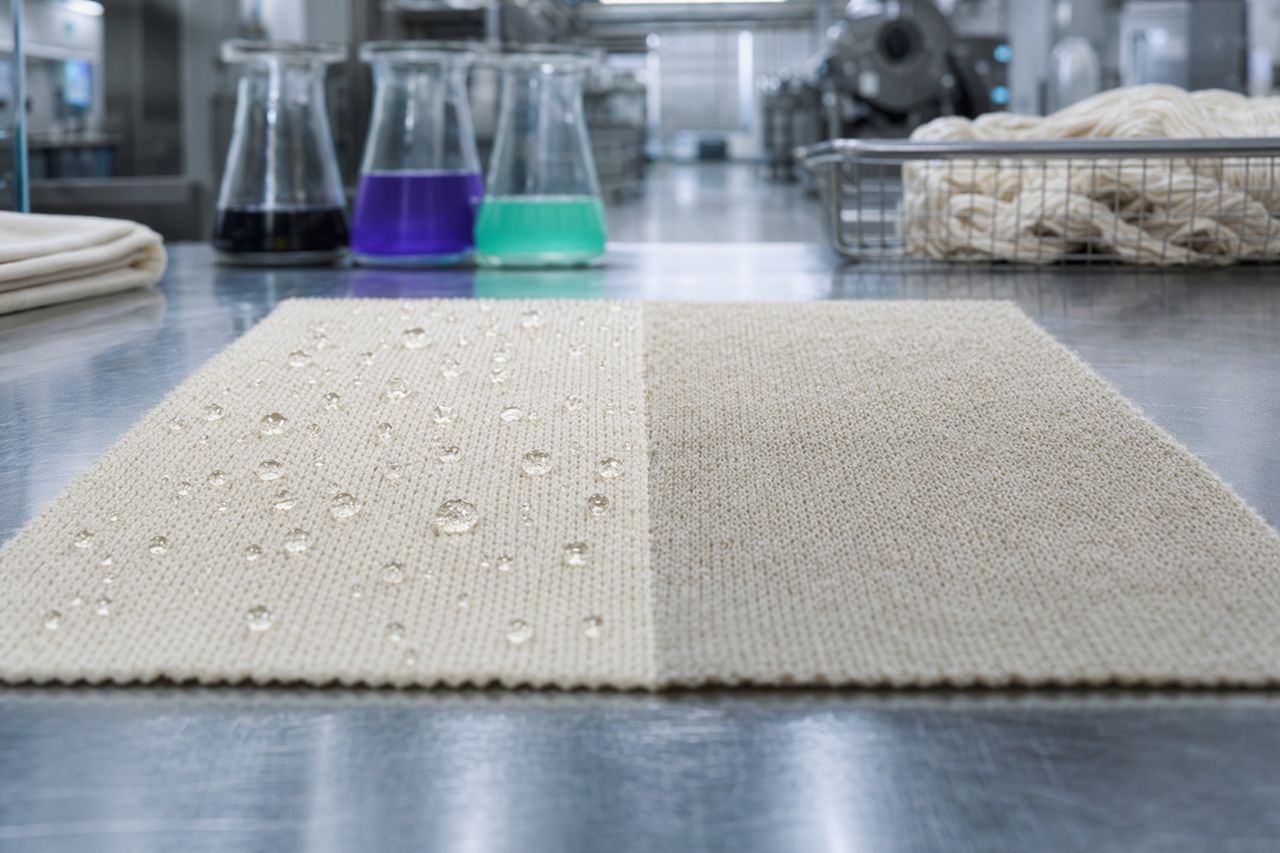
A useful check shows whether water spreads into the knit structure instead of sitting on the surface. The target is not just speed. It is consistency.
Cotton knit is tactile and three-dimensional. Surface wetting alone can look acceptable while inner yarn areas remain less prepared. Bioscouring should improve liquor access through the knit loops so the next process step is not fighting hidden hydrophobicity.
For dyehouses running tubular or open-width knit after jet preparation, this matters for shade continuity, side-to-center behavior, and repeatability across machine loads.
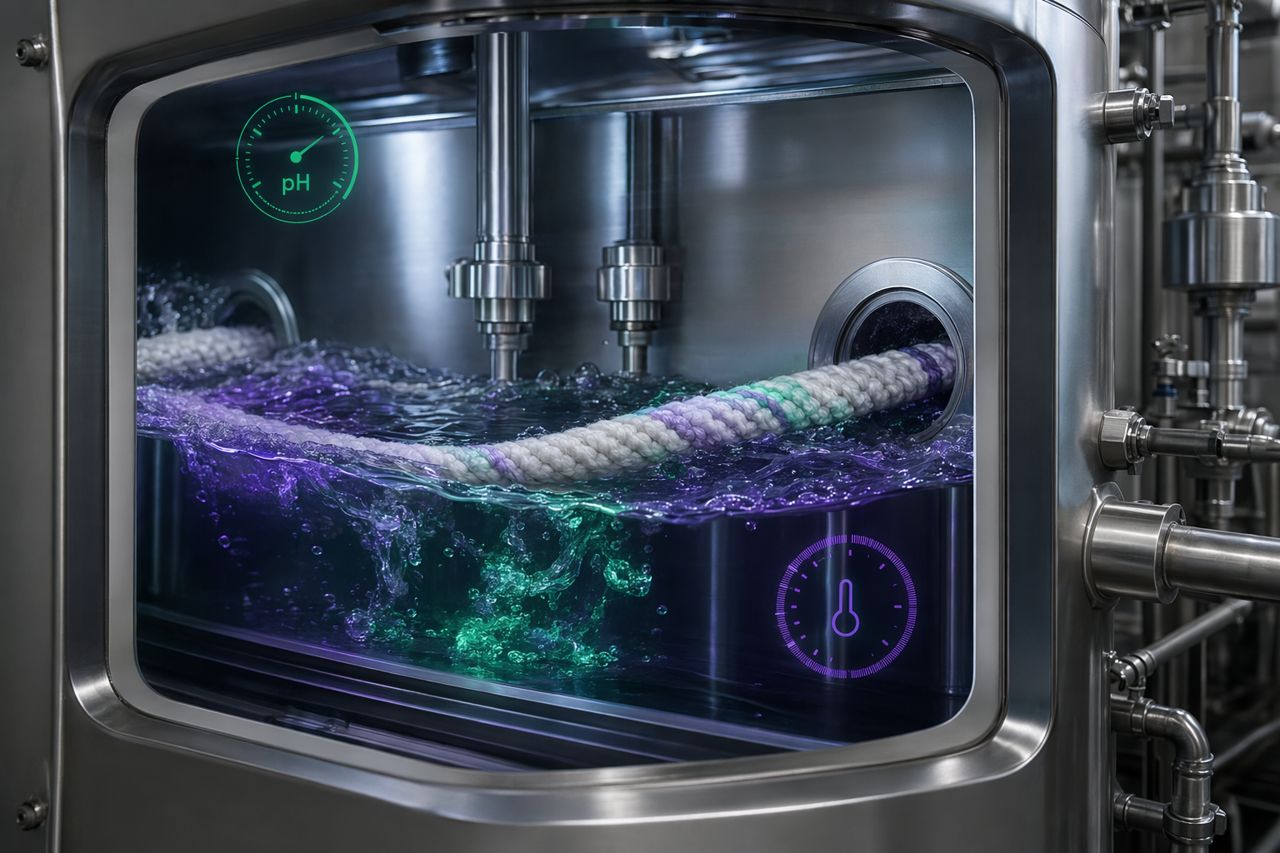
An enzyme program must fit the actual dyehouse recipe, not an idealized lab condition. Before reactive dyeing, confirm that the bioscouring step works with the plant’s wetting agents, sequestrants, stabilizers, pH adjustment practice, temperature profile, and rinse sequence.
The best enzyme choice is the one that performs inside your operating window and does not create new control problems.
Foam is not only a visual issue. In jet dyeing, unstable foam can affect rope movement, pump behavior, liquor exchange, and operator confidence. Bioscouring should contribute to clean wetting without turning the machine into a foam-management problem.
Absorbency checks should therefore be read alongside liquor behavior: circulation, drainage, rinsing, and machine cleanliness.
The strongest proof comes after dyeing: fewer unexpected shade corrections and better repeatability on regular articles. But the decision point comes earlier. If absorbency is uneven before dyeing, reactive shade consistency is already at risk.
A controlled bioscouring result should make lab-to-bulk transfer more predictable and reduce the number of variables operators have to chase during dyeing.
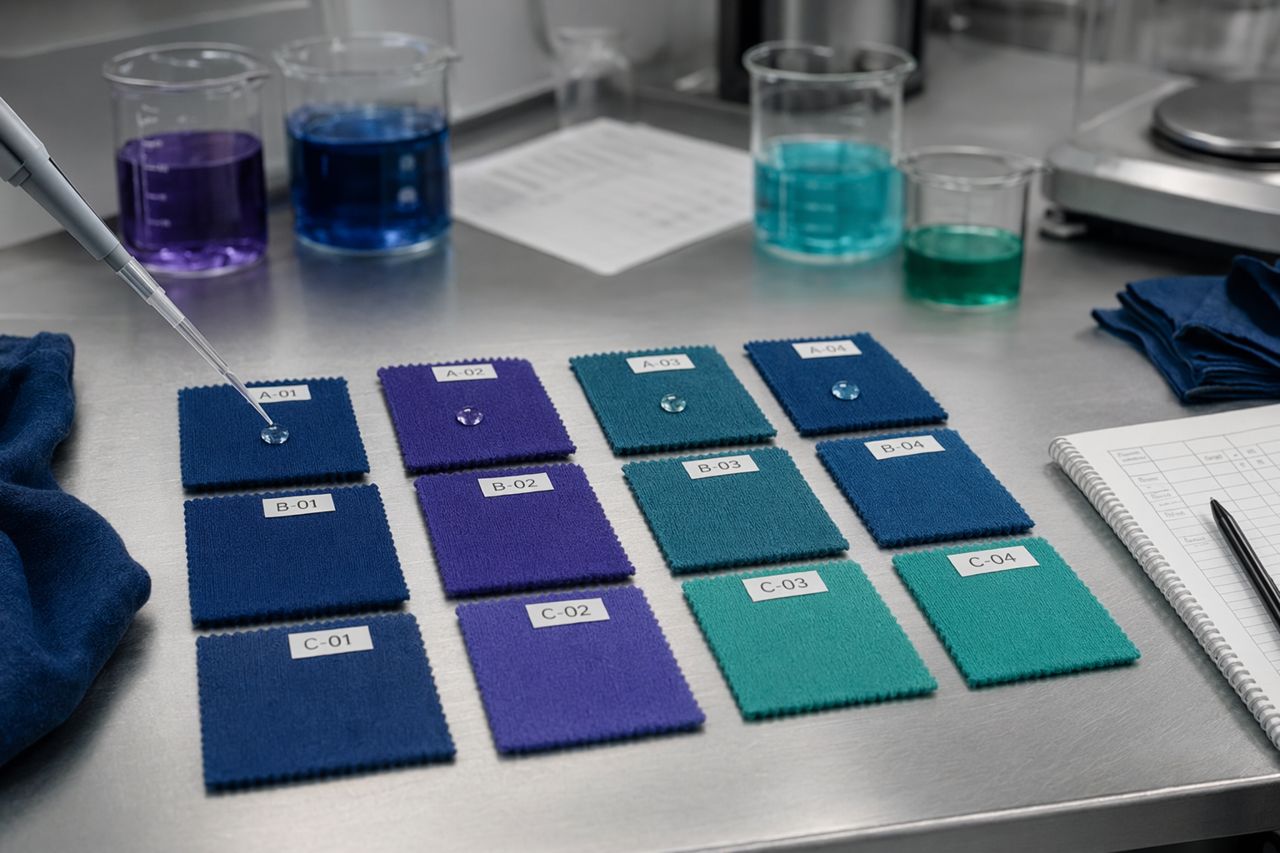
LoopBath recommends keeping checks practical, repeatable, and close to production reality. Typical control points include:
The value is in trend control. A check that operators trust and repeat consistently can prevent more cost than a complicated test that is rarely used.
For reactive dyeing, absorbency confirmation belongs after bioscouring and rinsing, before the dyeing stage is committed. This gives the technical team a chance to hold, adjust, or release the batch with evidence.
A practical release routine may include:
This is especially important on repeat shades, pale colors, sensitive bright tones, and high-volume programs where a small preparation fault can multiply into large commercial loss.
When evaluating an enzyme supplier for cotton bioscouring, ask for support beyond the product name. A practical supplier should help connect enzyme selection to production outcomes:
LoopBath approaches bioscouring from the dyehouse floor outward. The goal is not to add complexity. The goal is to make preparation more predictable before color value is put at risk.
Absorbency checks are small compared with the cost of a failed dyeing batch. When they are used well, they help technical teams:
In a cotton knit dyehouse, the most practical preparation result is not a claim. It is a batch that wets evenly and dyes predictably.
If your team is reviewing bioscouring performance, comparing enzyme options, or trying to reduce absorbency-related shade variation, LoopBath can help evaluate the recipe and define practical release checks for your plant.
Request a quote through the on-site form and share your cotton article, machine type, current preparation route, and target dyeing outcome.
Tell us your application and volume — we reply with pricing and lead time.