Why Bioscouring Fails on Cotton Knit | LoopBath
Common mill-side causes of failed cotton knit bioscouring, from wax variation and liquor flow to pH drift, temperature control, wet-out checks, and enzyme recipe compatibility.
Request pricing Common mill-side causes of failed cotton knit bioscouring, from wax variation and liquor flow to pH drift, temperature control, wet-out checks, and enzyme recipe compatibility.
Request pricingFor a cotton knit dyehouse, bioscouring only succeeds when the fabric becomes consistently wettable without creating avoidable strength loss, uneven dye pick-up, shade drift, or repeat processing. When it fails, the enzyme is often blamed first. On the floor, the root cause is usually a combination of fabric wax load, preparation history, liquor movement, pH control, temperature profile, and whether the recipe was built for that specific knit construction.
If you are searching for an enzyme supplier for cotton bioscouring, the real buying question is not only product selection. It is whether the supplier can help you stabilize bioscouring across greige lots, machines, shades, and commercial production pressure.
{{< explainer-video id="why-bioscouring-fails-cotton-knit" title="Why cotton knit bioscouring fails" >}}
A practical cotton knit bioscouring result is visible in production behavior:
Bioscouring is not a cosmetic step. It is a dyeability control step.
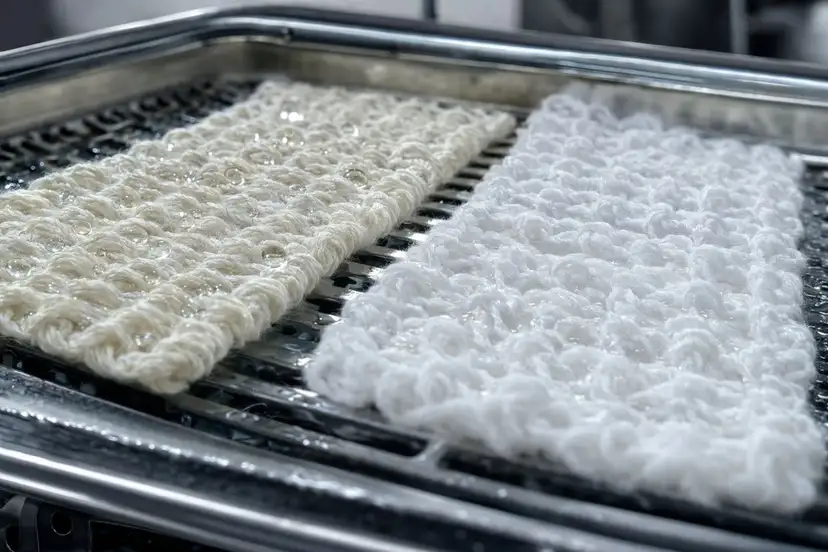
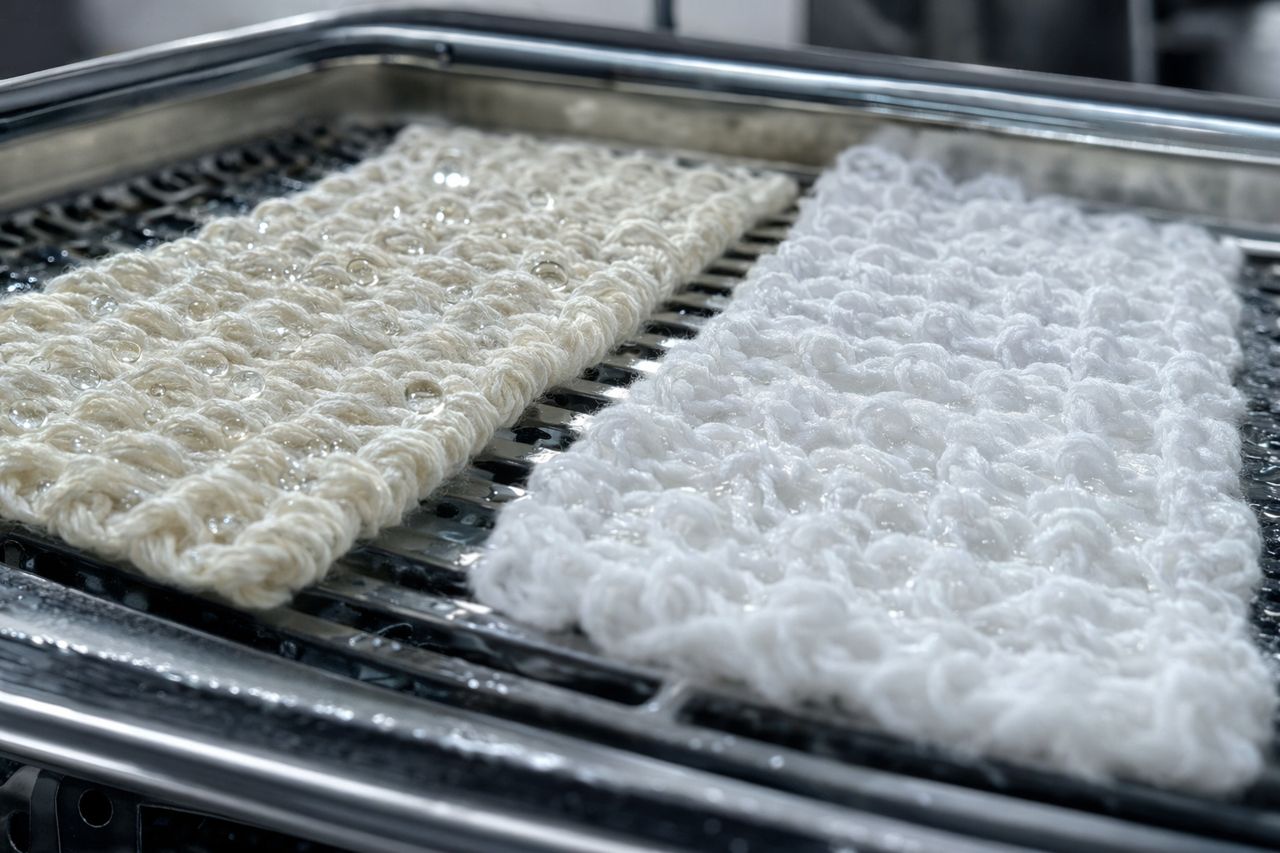
Greige cotton is not a fixed substrate. Wax, pectin, seed-coat fragments, lubricant residues, and knitting oil levels can change lot by lot. Two fabrics with the same count and construction can respond differently in the first minutes of preparation.
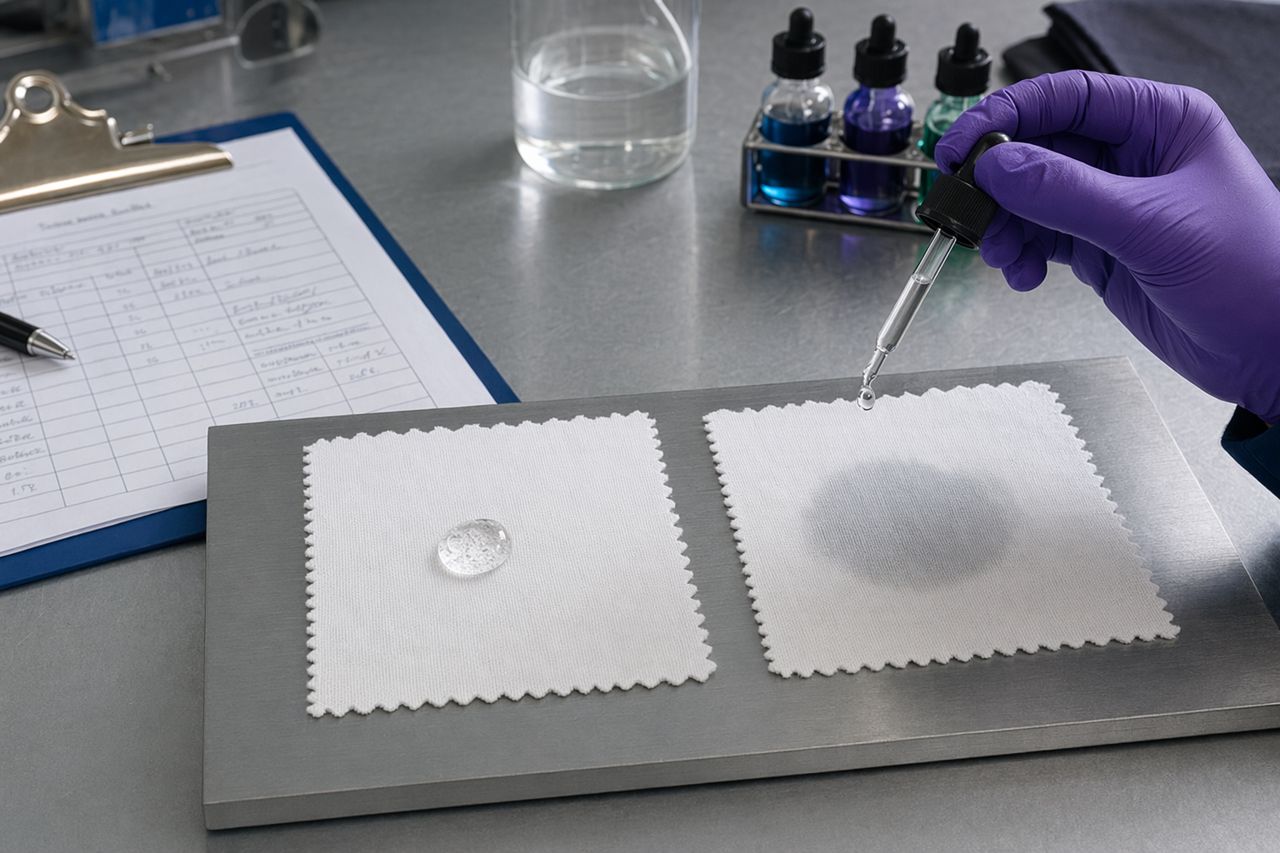
Build bioscouring approval around fabric behavior, not only recipe copy. Use simple absorbency checks, compare greige lots before bulk commitment, and keep a retained reference of known-good prepared fabric for the same article.
Cotton knit bioscouring depends on intimate contact between enzyme, auxiliaries, and the waxy cotton surface. In jet and soft-flow machines, rope circulation, loading level, nozzle behavior, foam tendency, and fabric compaction all influence the real process.
Review circulation stability before changing chemistry. A well-selected bioscouring enzyme cannot compensate for dead zones, trapped air, persistent foam, or rope areas that are not exchanging liquor consistently.
Enzyme bioscouring is more sensitive to process window discipline than conventional high-alkali scouring. Residual alkalinity, incoming water variation, auxiliaries, or poor dosing sequence can push the bath away from the intended pH profile.
Control pH as a production variable, not a lab note. Confirm the practical pH profile in the machine, after auxiliaries and fabric are loaded, and at the process stage where the enzyme is expected to work.
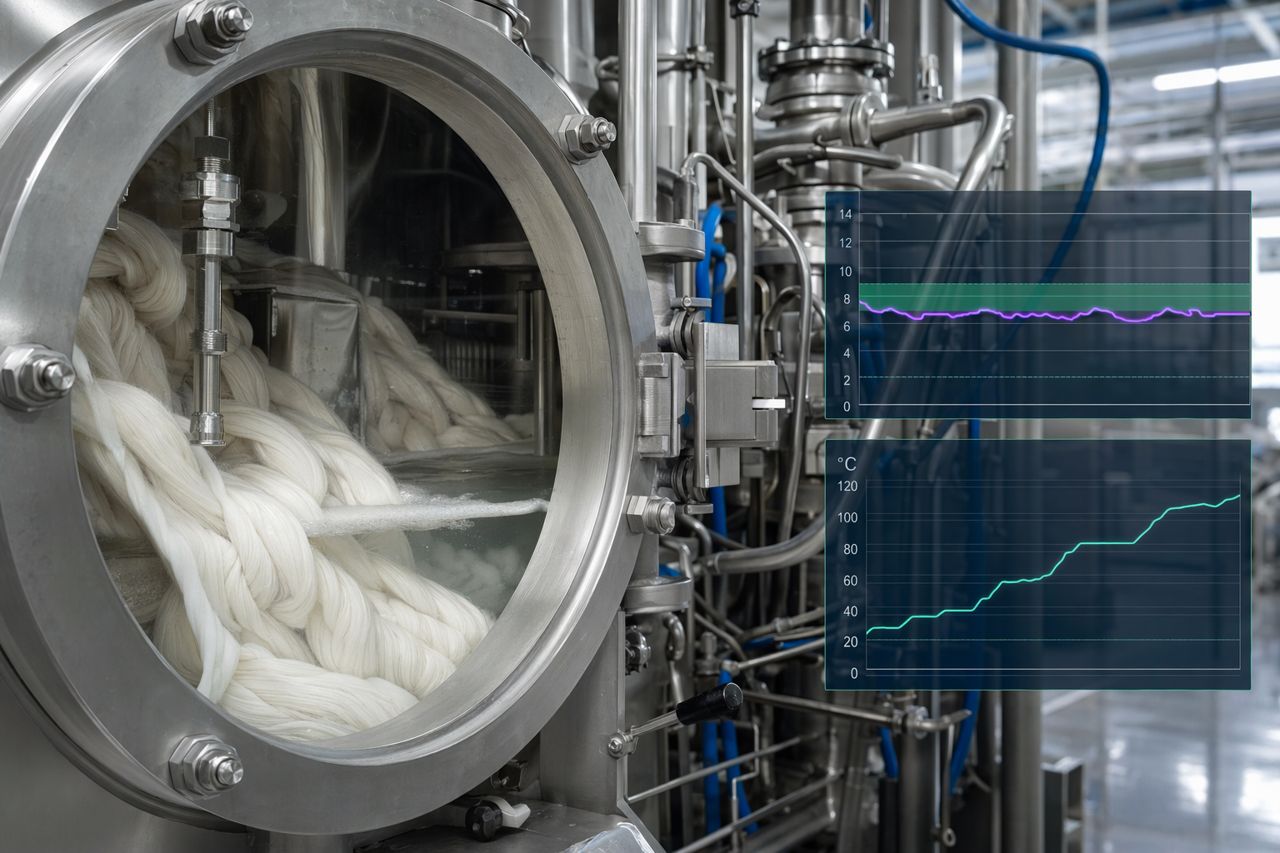
Cotton knit bioscouring is affected by how the bath reaches and holds the target operating zone. A ramp that is too fast, too slow, or uneven across the machine can change the time the enzyme spends under useful conditions.
Do not only record the setpoint. Check the actual ramp profile, hold stability, and whether the fabric is circulating freely throughout the active preparation period.
Bioscouring is rarely enzyme alone. Wetting agents, dispersants, sequestrants, buffers, anti-foam choices, and residual knitting oils all affect the result. A strong enzyme paired with the wrong support chemistry can look weak in production.
Evaluate the full preparation package as a system. A reliable enzyme supplier for cotton bioscouring should ask about water quality, fabric mix, machine type, auxiliaries, and downstream dyeing targets before recommending a product.
Many dyehouses discover failed bioscouring only after dyeing, when correction is more expensive. At that point, the symptom appears as shade variation, poor levelness, dullness, or repeat processing — but the preparation decision was already made.
The goal is to catch preparation risk before dyestuff, steam, water, and machine time are committed.
Laboratory bioscouring can overstate performance because fabric exposure, liquor movement, and contact are more uniform than in a loaded jet-dyeing machine. Bulk cotton knit adds rope compression, seam behavior, flow limitations, and machine-specific circulation patterns.
A commercially useful bioscouring program is not proven until it survives the production machine.
LoopBath works from the dyehouse reality outward: fabric type, machine behavior, process window, recipe compatibility, and repeatable dyeing outcomes. For cotton knit mills, that means recommending bioscouring solutions with attention to:
We do not treat bioscouring as a catalog substitution. We treat it as a controlled preparation step that has to perform inside your mill.
Before changing the enzyme grade, confirm these points:
When these controls are in place, bioscouring becomes easier to troubleshoot, easier to scale, and easier to justify commercially.
If your dyehouse is seeing inconsistent wet-out, shade drift, or rework after cotton knit preparation, LoopBath can help review the process conditions and recommend a suitable bioscouring approach.
Request a quote through the on-site form and include your fabric construction, machine type, current preparation sequence, target shade range, and the main failure symptom you want to reduce.
Tell us your application and volume — we reply with pricing and lead time.